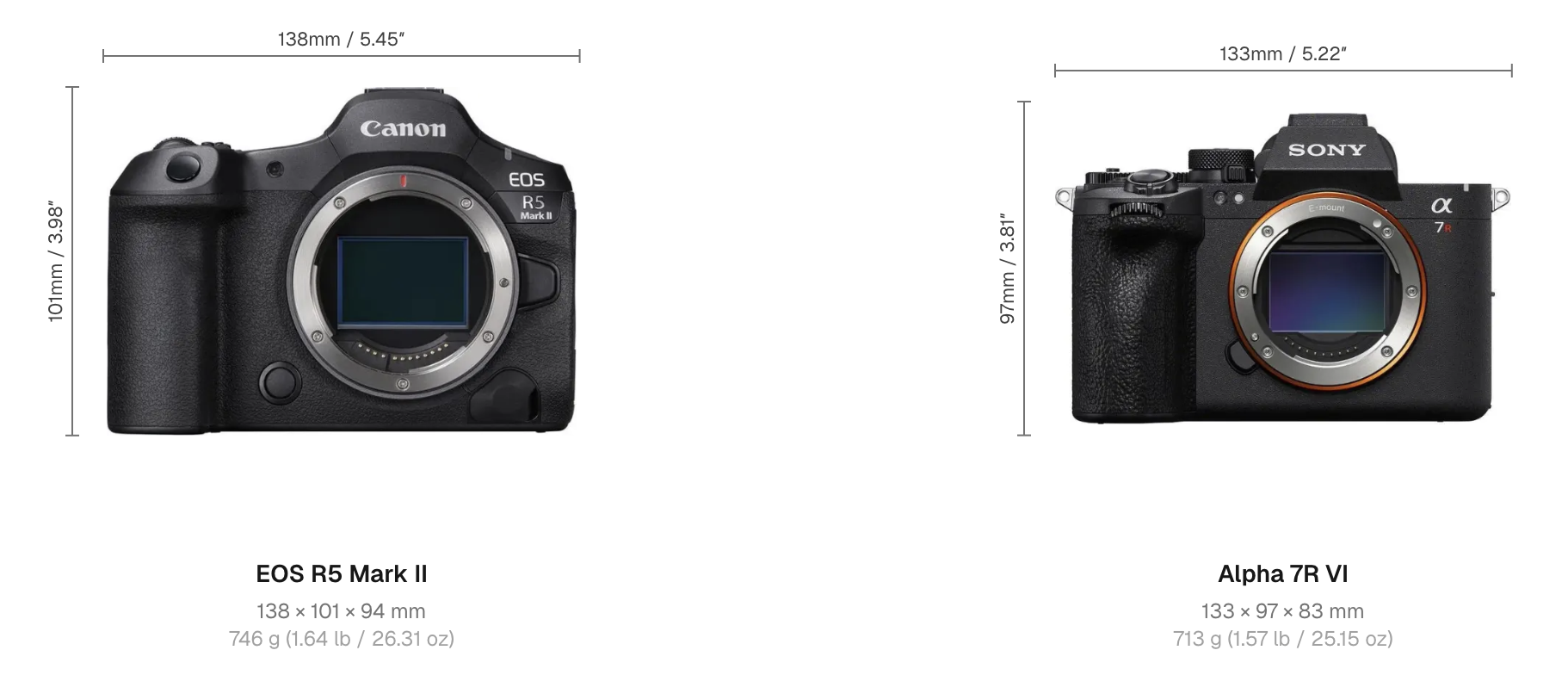
Here is a comprehensive summary of the differences and key specifications between the Canon EOS R5 Mark II and the Sony Alpha 7R VI. The matchup between the Canon EOS R5 Mark II ($4,299, released July 2024) and the Sony Alpha 7R VI ($4,499, released June 2026) represents a battle between a mature, high-speed hybrid powerhouse and a newer, ultra-high-resolution monster. While both cameras feature stacked sensor technology and shoot at an impressive 30 frames per second (fps), they target vastly different photographic priorities.
Key Specification Breakdown
| Feature | Canon EOS R5 Mark II | Sony Alpha 7R VI | Winner |
| Sensor Resolution | 45 MP | 66.8 MP (+48%) | Sony Alpha 7R VI |
| Sensor Type | Stacked BSI CMOS | Fully-Stacked CMOS | Tied (Tech) |
| Max Video Bit Rate | 2600 Mbps | 600 Mbps | Canon EOS R5 Mark II |
| RAW Buffer Depth | 600 frames | 150 frames | Canon EOS R5 Mark II |
| Battery Life (CIPA) | 320 shots | 600 shots | Sony Alpha 7R VI |
| EVF Resolution | 5.76M dots | 9.44M dots | Sony Alpha 7R VI |
| Weight | 746 g | 713 g | Sony Alpha 7R VI |
| Weather Sealing | Yes | No | Canon EOS R5 Mark II |
| Launch Price | $4,299 | $4,499 | Canon EOS R5 Mark II |
Core Strengths and Advantages
Why Choose the Canon EOS R5 Mark II?
The Canon EOS R5 Mark II stands out as the superior choice for sports, action, and high-end video workflows.
-
Unmatched Buffer & Bit Rates: It boasts a massive 600-frame RAW buffer depth (4x more than Sony) and a max video bit rate of 2600 Mbps (4.3x more than Sony).
-
Advanced Video Capabilities: It supports internal 8K 60p RAW recording and includes professional codecs like XF-HEVC S and XF-AVC S.
-
Action Features: It includes a Pre-Capture/Pre-Release function and a superior low-light autofocus limit (-6.5 EV vs -6 EV).
-
Durability: The body is fully weather-sealed, making it reliable for rugged outdoor use.
Why Choose the Sony Alpha 7R VI?
The Sony Alpha 7R VI is built for portraiture, studio, and landscape photographers who demand maximum detail.
-
Extreme Resolution: Its 66.8 MP fully-stacked sensor delivers 48% more resolution than the Canon, allowing for massive prints and heavy cropping.
-
Immersion: It features a vastly superior 9.44M-dot HDR OLED electronic viewfinder with a 0.9x magnification (compared to Canon’s 0.76x).
-
Efficiency: It offers nearly double the battery life (600 shots vs 320 shots) and a slightly lighter body.
-
Ecosystem: Sony users benefit from a much larger selection of over 350 native lenses (including 270 third-party options), compared to Canon’s 105+ native lenses.
Conclusion: Which One is For You?
The Canon EOS R5 Mark II is the ultimate hybrid speedster. If you shoot fast-moving sports, wildlife, or require intensive internal RAW video workflows, its deep buffer, weather sealing, and video bit rates make it the winner (scoring 9.5/10 in Sports and Video use cases).
The Sony Alpha 7R VI is the high-res king. If your work revolves around landscapes, portraits, commercial studio sessions, or you heavily rely on third-party lenses, its 66.8MP sensor, pristine EVF, and long battery life justify its higher price tag.
You can read full comparsion at Compare.Cameraegg.org.