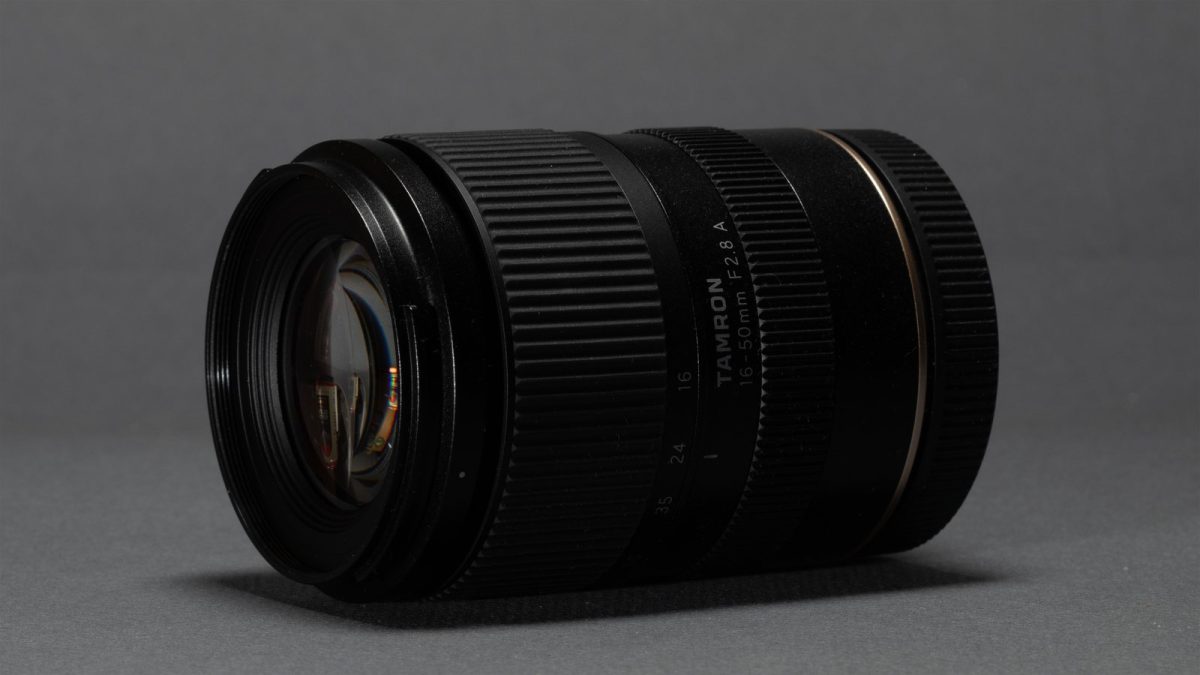
The Tamron 16-50mm F2.8 A and Sigma 18-50mm F2.8 DC DN Contemporary target a familiar upgrade: replacing an APS-C kit zoom with a compact, constant-F2.8 lens. Tamron’s most obvious difference is at the wide end, where 16mm can make framing easier in a small room or on a narrow street.
Which one makes sense depends first on your mount, then on whether your present lens actually feels too tight at 18mm. This comparison uses manufacturer specifications and framing considerations; it is not a hands-on sharpness or autofocus test.
The differences on paper
| Feature | Tamron 16-50mm F2.8 A | Sigma 18-50mm F2.8 DC DN |
|---|---|---|
| Native focal range | 16-50mm | 18-50mm |
| Maximum aperture | F2.8 throughout | F2.8 throughout |
| Equivalent range on 1.5× APS-C | 24-75mm | 27-75mm |
| Equivalent range on Canon APS-C | 25.6-80mm | 28.8-80mm |
| Sony E-mount weight | 305g | 290g |
| Filter thread | 55mm | 55mm |
| Official mount list | Sony E, Canon RF, Nikon Z, Fujifilm X | Sony E, Canon RF, Fujifilm X, L-Mount |
Sources: Tamron announcement and Sigma specifications. Weights vary by mount; the table compares Sony E versions on the same basis.
Where 16mm makes a practical difference
Imagine photographing friends around a restaurant table with your back against a wall. You cannot step farther away, so the wider lens gives you a useful framing option. The same applies to room interiors, buildings viewed from a narrow pavement and travel scenes where moving backward changes the composition.
If most of your pictures are portraits near 35-50mm, that extra width may be less valuable. Both lenses end at 50mm and offer F2.8. Replacing a lens you already enjoy simply to gain a wider starting point is a different decision from choosing your first fast standard zoom.
Check mount and stabilization before ordering
Sigma’s current official list does not include a Nikon Z version of the 18-50mm. A Canon RF or Sony E copy is not a substitute for a native Nikon Z lens. For Nikon shooters, this is therefore a comparison of concepts, not two directly interchangeable purchase options.
Tamron explicitly lists the 16-50mm A among its lenses without optical stabilization. If handheld video or slow-shutter photography is your priority, check your camera’s stabilization and consider whether a stabilized alternative better addresses the problem.
For Canon RF buyers, compare the Tamron 16-50mm F2.8 A RF listing with the Sigma 18-50mm F2.8 RF listing at B&H. These links are specifically for RF versions.
Tamron announced staggered release dates: October 29 for Sony E and Canon RF, November 19 for Nikon Z, and December 17 for Fujifilm X. Confirm local delivery when ordering. For the choice itself, start with your photographs: if 18mm repeatedly leaves something outside the frame, Tamron’s wider range directly addresses that frustration.