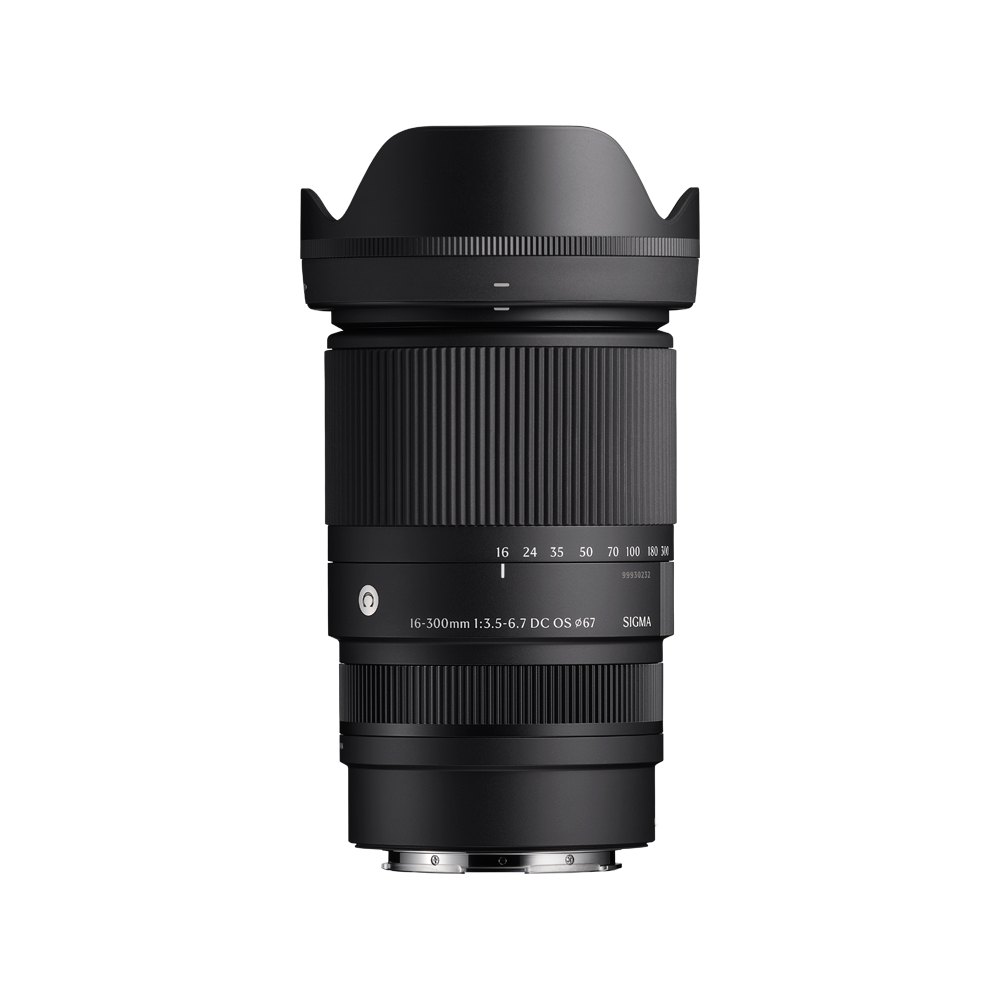
Sigma scheduled the 16-300mm F3.5-6.7 DC OS Contemporary for Nikon Z for release on November 5, 2026. For a Z50 II owner, the appeal is straightforward: a broad travel range without repeatedly changing lenses.
On Nikon DX, the lens gives an angle of view comparable to roughly 24-450mm on full frame. That spans a wide landscape, an everyday portrait and a distant detail within a single outing. The release schedule does not by itself establish stock at your local dealer. Sigma’s Nikon Z announcement.
The travel problem it can solve
A large zoom range is most valuable when the opportunity to change equipment is limited: a family day out, a crowded viewpoint, a vehicle tour or a walk where you want to keep one camera ready. The relevant question is how many pictures you lose while deciding which lens to fit.
It is less persuasive if your usual photography involves one subject and one working distance. A portrait session or a day spent waiting for birds can justify a more specialized lens. A lens that covers a great many situations does not automatically become the best choice for each individual one.
Check the exact Sigma 16-300mm Nikon Z version at B&H for current pricing and delivery. Sigma sells other mounts, so verify Nikon Z in the listing before choosing a kit.
Stabilization helps camera shake, not a running subject
Sigma specifies optical stabilization rated at six stops at the wide end and 4.5 stops at the telephoto end under its stated CIPA test conditions. It also lists an HLA autofocus motor, AF-C support and a maximum 1:2 magnification ratio. Those are manufacturer specifications, rather than results from our own Nikon Z-mount test.
The optical stabilizer is relevant to a Z50 II because Nikon lists lens-based VR for that body. It can help you hold a distant static subject more steadily. It cannot stop a bird’s wings or a child’s movement; those still call for an appropriate shutter speed. Nikon Z50 II specifications.
Understand the long-end aperture
The maximum aperture changes from F3.5 to F6.7 as you zoom. At the long end, fast shutter speeds in dim light can push you toward a higher ISO. That is an exposure tradeoff to consider before treating a superzoom as a replacement for a bright telephoto.
Take a familiar evening scene as your reference. If you already struggle to keep a moving subject sharp with the shutter speed your present lens allows, extra focal length alone will not fix that problem. If you mainly photograph daylight travel scenes and distant static details, the balance can be quite different.
Already carrying a compact Nikon travel zoom? Compare what you gain in framing range with what you are prepared to carry all day. The NIKKOR Z DX 18-140mm at B&H is another native option to investigate. This is a use-case guide, not a laboratory ranking of their optical performance.