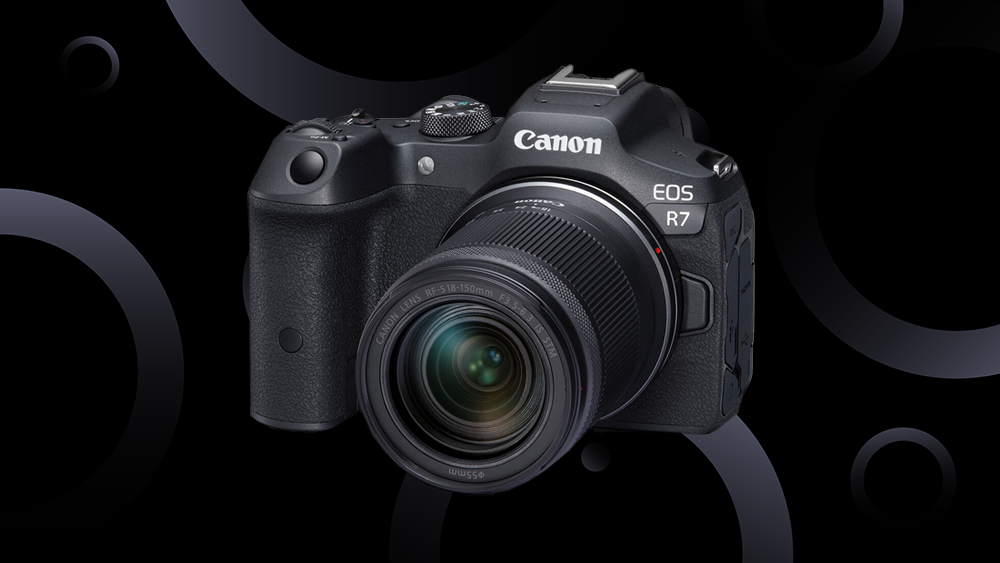
The photography community has been buzzing about the Canon EOS R7 Mark II for months, with many hoping to see the camera launch before year’s end. However, those expectations have been tempered by recent reports indicating the successor to Canon’s popular APS-C mirrorless camera won’t arrive until late Q1 2026 at the earliest. While the delay may disappoint eager buyers, emerging details suggest the wait could be worthwhile.
Anonymous Sources and Credibility Questions
New information has surfaced from anonymous sources, a common occurrence in the camera rumor mill that occasionally proves accurate. These particular tipsters have demonstrated roughly a 70% accuracy rate historically, making their claims worth considering while maintaining healthy skepticism. Unlike some speculation that floods online forums, these reports contain specific details that suggest insider knowledge, though verification remains impossible until official announcements or more reliable sources confirm the information.
A Dramatic Departure From Tradition
The most compelling aspect of these reports characterizes the R7 Mark II as a “big departure” from its predecessor. Sources compare the upcoming camera to an APS-C equivalent of the EOS R6 Mark III, suggesting Canon is elevating the R7 line’s positioning within their product hierarchy. This wouldn’t simply be an incremental update with improved autofocus and slightly better image quality—instead, Canon appears to be fundamentally reimagining what an APS-C flagship should offer.
The camera will reportedly feature significant ergonomic changes alongside a “new form factor.” While specifics remain vague, previous whispers have suggested a slightly larger body design. This could address complaints from photographers who found the original R7’s compact size somewhat cramped during extended shooting sessions. A larger body could also accommodate improved weather sealing, better heat dissipation for extended video recording, and more intuitive control placement that professional photographers demand.
The Stacked Sensor Bombshell
Perhaps the most attention-grabbing claim involves the alleged inclusion of a brand-new stacked CMOS sensor. This revelation carries particular weight because reports indicate the full-frame EOS R6 Mark III won’t receive this premium technology, creating an unusual situation where the APS-C model would feature more advanced sensor technology than its full-frame sibling.
The economic reasoning behind this decision makes sense when examined closely. Stacked sensors are notoriously expensive and complex to manufacture, but the smaller APS-C format would cost considerably less to produce than a full-frame equivalent. This could allow Canon to offer cutting-edge technology at a more accessible price point while reserving their most expensive stacked full-frame sensors for flagship models like the R1 and potential R5 updates.
However, even among believers, this claim carries significant uncertainty. The reported 50/50 confidence level suggests this information should be viewed as speculative rather than confirmed. If true, it would represent a monumental shift in Canon’s APS-C strategy and deliver performance capabilities previously reserved for professional full-frame bodies.
Processing Power and Performance
The R7 Mark II will reportedly be equipped with a DIGIC accelerator, though whether this represents an updated version of the DIGIC X processor remains unclear. Canon’s processor naming can be confusing—DIGIC X refers to a processor series that receives consistent updates with each new camera model. Industry insiders have revealed that Canon actually uses three different processor configurations across their lineup, with higher-end cameras receiving the most powerful versions. Where the R7 Mark II falls in this hierarchy could significantly impact its real-world performance.
Extended Testing and Quality Assurance
The extended development timeline may reflect Canon’s response to quality control issues that plagued the EOS R5 Mark II launch. Like the R6 Mark III, which underwent extensive field testing before release, the R7 Mark II appears to be receiving similar scrutiny. This cautious approach suggests Canon is prioritizing reliability over rushing to market, a decision that should ultimately benefit consumers even if it requires patience.
The Waiting Game
While these reports paint an exciting picture of Canon’s APS-C future, appropriate skepticism remains essential until confirmation arrives from verified sources. If even partially accurate, however, the EOS R7 Mark II could fundamentally reshape expectations for what crop-sensor cameras can achieve, potentially offering professional-grade performance at enthusiast-friendly prices.
via: CR